RESEARCH
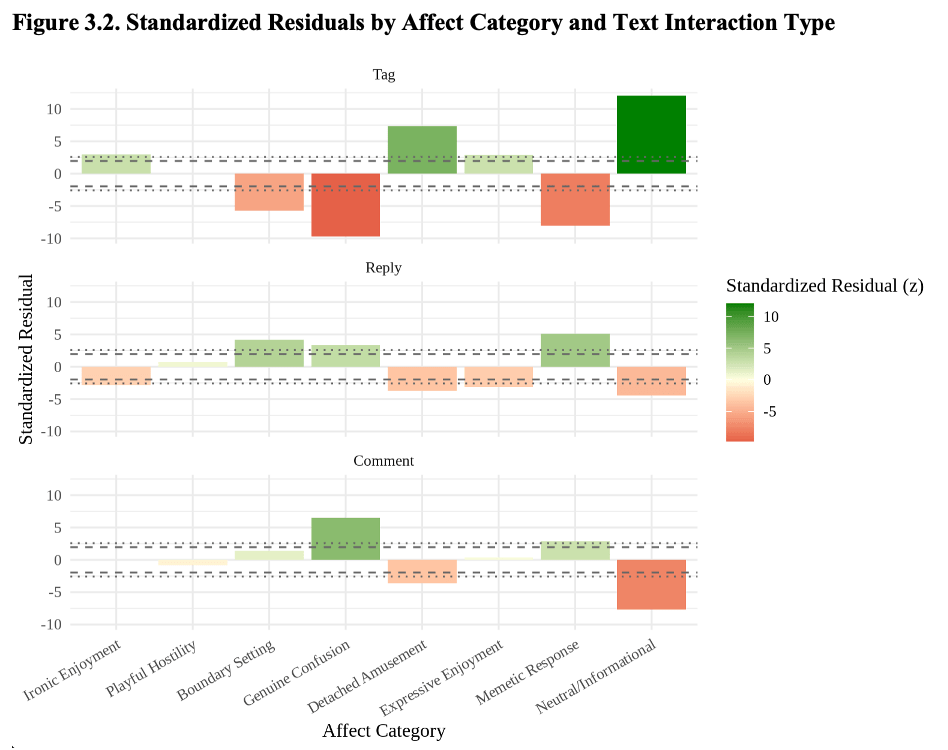
This project examines how performing affect operates as a marker of cultural status and belonging in digital spaces. While existing research has explored affective publics (Papacharissi 2015), memetic circulation (Shifman 2014; Milner 2016), and digital distinction (Zulli and Zulli 2022), less attention has been paid to how interactional affordances within a single platform shape affective expression and social differentiation. Focusing on the loss.jpg meme—a highly reduced and self-referential format that rewards recognition and interpretive fluency—this study analyzes hashtags, replies, and comments to reveal how users perform emotion across varying degrees of visibility and audience reach.
I argue that affect on Tumblr operates as a form of social performance structured by visibility, interpretive labor, and symbolic status. Users display affective literacy—the capacity to express the right feeling in the right register toward a meme—as a form of cultural fluency and subcultural capital (Ahmed 2004; Illouz 2007; Bourdieu 1986). Expressions of ironic enjoyment and playful hostility reveal how exaggerated negativity can serve affiliative functions, while confusion and boundary-setting interactions expose ongoing negotiations of interpretive hierarchy.
Tumblr’s layered affordances further organize these affective practices: tags function as semi-private, reflexive spaces; replies as dialogic, interactional spaces; and comments as highly public, performative ones. Together, these layers constitute a stratified affective economy in which emotional tone becomes a proxy for cultural capital. By situating these findings within scholarship on digital affect, platform vernaculars, and status signaling, the chapter demonstrates that affect is not merely a byproduct of online communication but a key medium through which social hierarchies and communal belonging are organized in networked publics.
Social Media Platform: Tumblr
Analysis: sentiment analysis, content analysis, chi-square tests
Keywords: affective economy; affective literacy; cultural capital; subcultural capital; affordances; digital culture; platform vernaculars; social belonging
*To be presented at the American Sociological Association (ASA) Annual Meeting, 2026.
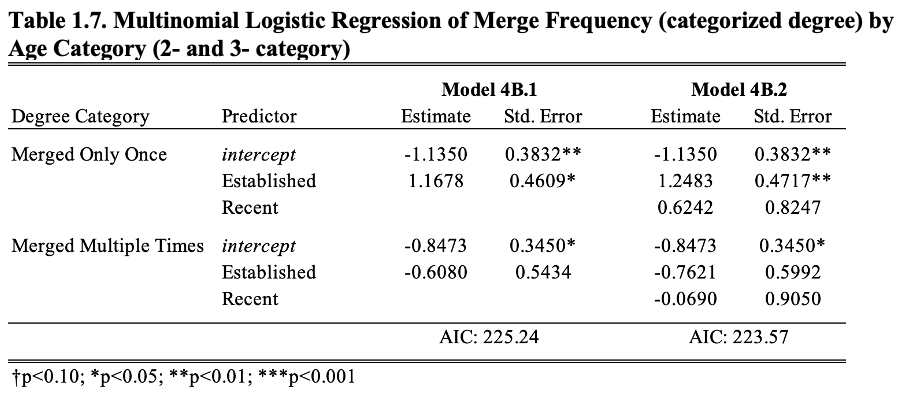
This paper examines how memes are combined and recombined across platforms through a process I term memetic merging—the blending of existing memes into one. Drawing on theories of cultural mashups, symbolic capital, and digital performativity, I conceptualize merging as a form of cultural recombination shaped by accessibility, salience, and recognizability. Using a dataset of 117 memes with 46 mutual merge ties collected from Twitter/X, I apply exponential random graph models (ERGMs) and a multinomial logistic regression to identify which meme characteristics influence meme merging patterns.
Results show that multimodal flexibility—the ability of a meme to circulate via different media formats—is the strongest predictor of merge likelihood, underscoring the importance of accessibility for creative reuse. In contrast, measures of salience, including meme age and platform origin, were not significant predictors, suggesting that merging is driven more by interpretive dynamics than by visibility or exposure. Established memes, however, show distinct patterns: they are more likely to appear in single merge events, indicating their use as recognizable or “classic” cultural references rather than as adaptable templates for ongoing remix.
These findings reveal that meme merging is not a random or purely viral process but one structured by accessibility and cultural hierarchies of fluency and symbolic value. Memetic merging thus operates as a social signal of belonging and interpretive skill within digital publics, illuminating how online users navigate shared repertoires of humor, reference, and identity through the creative recombination of familiar formats.
Social Media Platform: Twitter/X
Analysis: social network analysis, exponential random graph modeling, multinomial logistic regression
Keywords: internet memes, digital culture, memetic merging, cultural recombination, symbolic capital
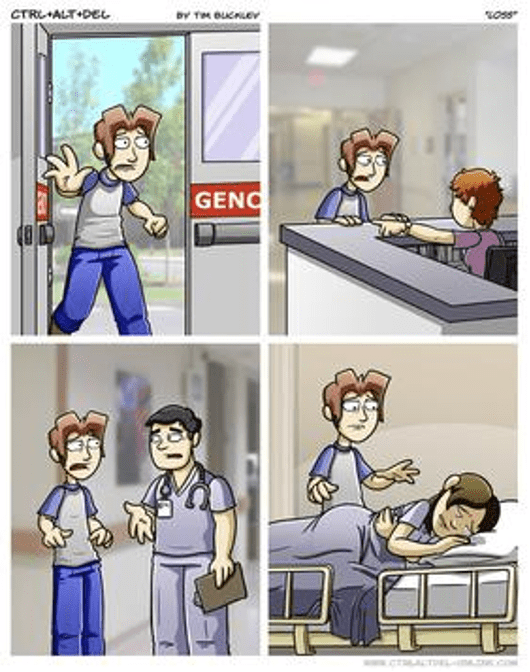
This chapter examines a category of internet memes that challenges conventional assumptions about recognizability, coherence, and shared meaning: the “reduced meme.” Unlike standard meme formats, which retain consistent visual or textual elements and facilitate broad comprehension, reduced memes undergo extensive unstructured manipulation, often resulting in the loss of referential meaning and minimal visual cues. Using the high-longevity example of loss.jpg, this chapter compares reduced memes to more traditional, non-reduced memes across three dimensions—alteration patterns, semantic stability, and contextual presentation—highlighting how variation within and between meme families influences social experience. The analysis demonstrates that reduced memes foster exclusivity, in-group signaling, and meta-ironic interpretation, creating social dynamics not captured by existing classification frameworks. The chapter argues for an expanded approach to meme categorization that accounts for shifting forms, deteriorating or abstracted meaning, and user interactions, emphasizing the interplay of play, ambiguity, and cultural knowledge in digital communities. By doing so, it contributes to a deeper understanding of how memes operate as social objects, not only through shared symbolic reference but also through context-dependent recognition, insider knowledge, and participatory engagement.
]
Social Media Platform: Twitter/X, Tumblr, Reddit
Analysis: comparative content analysis
Keywords: internet memes; reduced memes; meme classification; digital culture; in-group signaling; meta-irony; social experience; participatory culture; loss.jpg
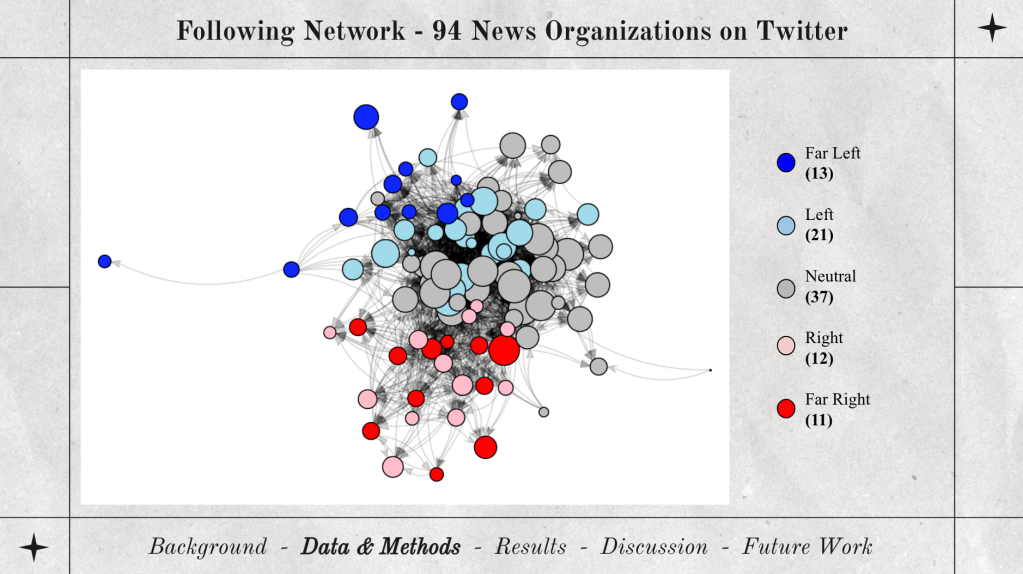
In this paper, I focus on the 94 most prominent US news organizations, and use reliability and bias data from the 2019 version of Ad Fontes Media’s Media Bias Chart. This dataset includes a reliability score (on a scale of 0-64, with 64 being the best) and bias score (on a scale of -42 to +42 with 0 being neutral, -42 being the most left-leaning, and +42 being the most right-leaning) for each organization based on individual article reviews from each. When the data was accessed in July 2020, the Ad Fontes Media dataset included 7116 total individual article reviews for articles published by 104 news organizations. Of these 104 news organizations, only 94 are used in this paper because the other 10 organizations either did not have a Twitter presence (the result of being banned or otherwise) or did not have enough article reviews in the dataset for the scores provided to be an adequate representation of the organization. I then constructed a network of these 94 news organizations based on who followed whom on Twitter as of July 2020.
Using this data, I model the structure of the Twitter following network using an exponential random graph model (ERGM). I include covariates based on reliability and political bias to test which factors are influencing the structure of the network and whether they operate through homophily and/or status. I use an absolute difference covariate in reliability score between two organizations to look for the extent to which an organization is more likely to associate with another if the difference between their reliability scores is smaller. I also use an absolute different covariate for the political bias scores between organizations to test the extent to which one is more likely to associate with another who has a bias score closer to their own. I test the bias homophily in a second way as well by including a covariate for whether two organizations who are associated fall into the same political bias category of “left,” “right,” or “neutral” overall. Finally, I include an edge covariate using an interaction of the two scores to see how they may work together to structure the network.
Through mixing matrices and an ERGM, I find that there is strong homophily based on political bias of each organization that is larger than that for reliability and that there is still a preference for following the most reliable news organizations, but organizations are more willing to follow an organization of different reliability if it has a similar political bias. This suggests that homophily is operating to some extent, particularly with regard to political bias; however, status motivations may guide association patterns at different ends of the political spectrum when we consider the role of reliability. I discuss the implications of these results for understanding what factors may influence the structure of news organization associations and what this may mean for political polarization. If we consider the way in which this following relationship impacts each organization’s audiences, we may see increases in political polarization and warped views of what is good, reliable news.
Social Media Platform: Twitter/X
Analysis: social network analysis, exponential random graph modeling
* Presented at the American Sociological Association (ASA) Annual Meeting, 2024
* Presented at the International Network for Social Network Analysis (INSNA) Sunbelt Annual Conference, 2023
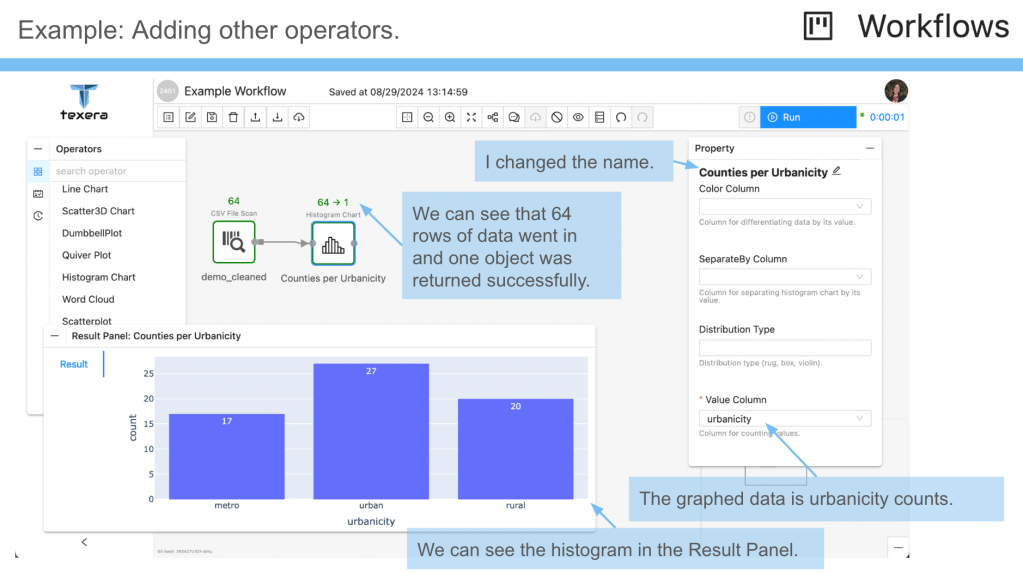
- Conducted user-focused research to evaluate and improve the usability of Texera, a collaborative data analysis platform, identifying friction points and opportunities to enhance researcher workflow and experience
- Partnered cross-functionally with computer science, data, and social science stakeholders to translate user needs into platform improvements and prioritize feature enhancements
- Designed and executed usability testing sessions, synthesizing qualitative feedback and behavioral data into actionable recommendations for improving user engagement and accessibility
- Developed 5 end-to-end user guides and onboarding documentation, improving product adoption and reducing learning curve for new users
- Conducted market and competitive research on comparable platforms, identifying areas where existing tools excelled or fell short, and surveyed potential users to understand unmet needs and feature priorities
- Leveraged R within Texera to generate visualizations and support three research initiatives, using data insights to inform UX and workflow improvements and provide proof-of-concept to stakeholders
- Contributed to iterative product refinement by documenting user journeys, surfacing pain points, and communicating findings to technical teams
Graduate student research assistant on a collaborative data analysis platform being built by the computer science department.
Primary tasks included market research; writing surveys, distributing them to target audiences, and analyzing results; writing extensive documentation and guides on platform use; and conducting preliminary user experience research.
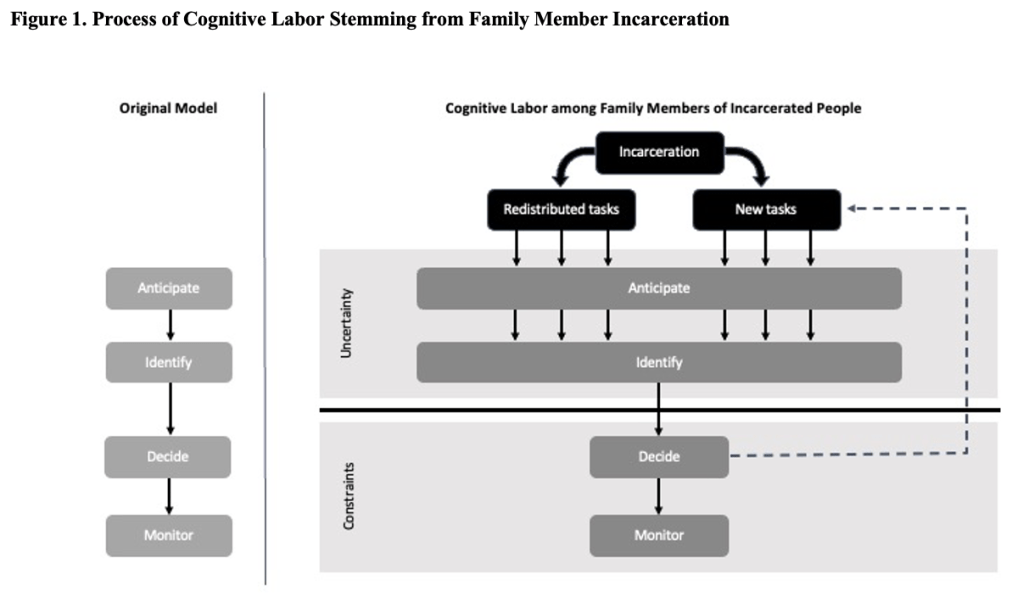
Cognitive labor, disproportionately undertaken by women, is central to household functioning and is likely a critical aspect of managing the fallout of family member incarceration. We use 279 interviews with mothers and romantic partners of incarcerated men to describe the scope and process of cognitive labor stemming from family member incarceration. First, we show that the tasks stemming from family member incarceration involve the four stages of cognitive labor (anticipating needs, identifying options, making decisions, and monitoring results). Second, the uncertainty of the criminal legal system means family members spend extensive time in the first two stages. Third, constraints of the decision-making stage both stall and redirect cognitive labor. Fourth, family members undertake cognitive labor regardless of their relative’s incarceration history. These findings show that the cognitive labor process unfolds distinctly and more burdensome for disadvantaged groups, who are disproportionately routed through institutions that reorient family life to demand intensive cognitive labor.
*Accepted for publication in Social Problems 02/2026.
*Presented at the American Sociological Association (ASA) Annual Meeting, 2024.
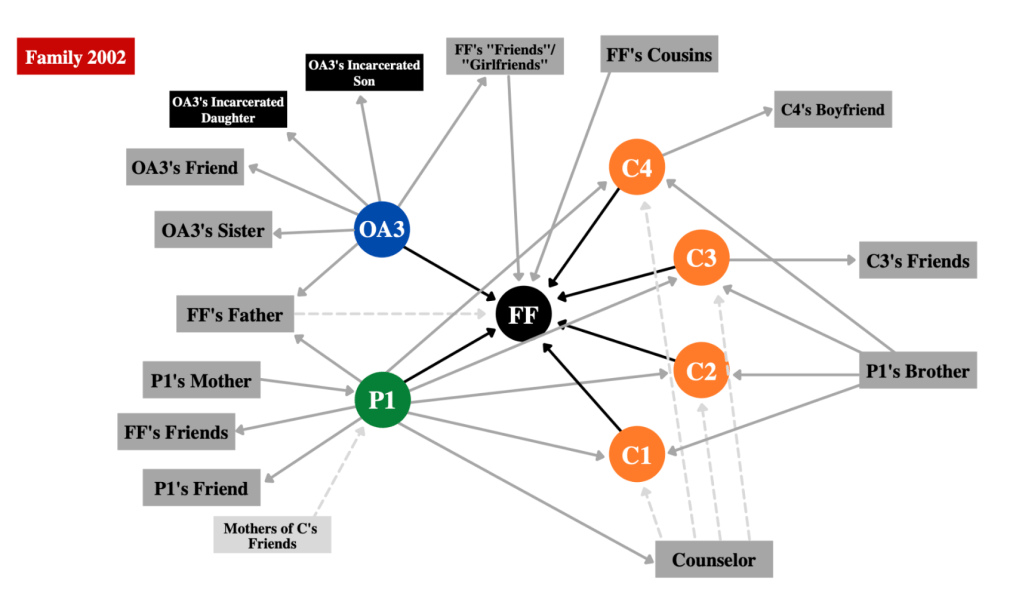
Research consistently documents the wide-ranging strains of family member incarceration, but less is known about how family members work together to manage these strains and the strains of this coordination. We use in-depth interview data from the Jail and Family Life Study, drawing on longitudinal interviews with 69 mothers and 85 romantic partners of incarcerated men, to understand the symbiotic harms of jail incarceration for families. We find that the strains of family member incarceration engender reactionary brokering, a concept we define as the synergistic work family members engage in (with each other and occasionally with institutional actors) to manage strains generated by the sudden absence of a loved one. We uncover four types of reactionary brokering—exhaustive, concentrated, sporadic, and monitoring—and trace the socially patterned processes that shape these roles. While reactionary brokering can provide critical support for families, it also generates substantial new strains, thereby complicating our
understanding of the rippling repercussions of incarceration. The concept of reactionary brokering illuminates how family members experiencing the same strain—in this case, incarceration—arrive at divergent brokering roles that can exacerbate existing inequalities.
*Presented at the American Sociological Association (ASA) Annual Meeting, 2022.
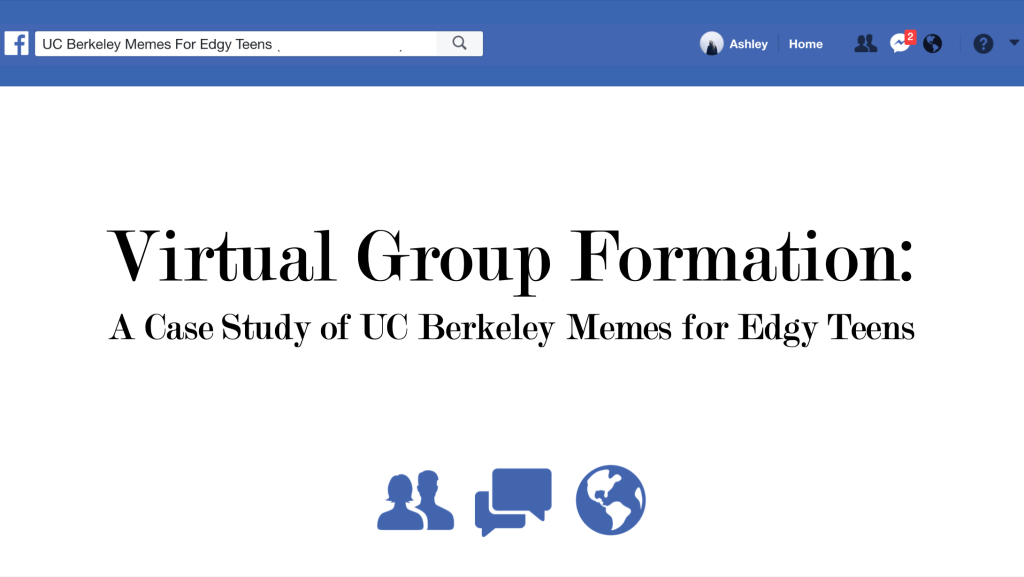
This case study uses content analysis and in-depth interviews to examine whether or not Durkheim’s theory of group formation processes being reliant on common group morals, universally understood totems, and collective effervescence discussed in The Elementary Forms of Religious Life are present in a virtual, secular community such as UC Berkeley Memes for Edgy Teens (UCBMFET)—currently at a member count of over 160,000. Through these methods, I find strong evidence for the presence of common morals and norms of conduct, strong evidence for the presence of commonly understood symbols, and partial evidence for the presence of collective effervescence within the community. I discuss the evidence for each of these phenomenon as well as the limitations to the measuring of collective effervescence because of the experience of this phenomenon that is physical and thus not represented within a virtual community.
Social Media Platform: Facebook
Method: in-depth interviews
Keywords: group formation, morals, symbols, collective effervescence, memes, virtual community, participatory culture, actor-network theory
University of California, Berkeley (2016-2017)
Archival data collection for Matthew J. Stimpson, Ph.D. Candidate
Faculty Advisor: Daniel J. Schneider
University of California, Irvine (2016)
Research Assistant for Andrew Penner
Role: data cleaning, codebook drafting, dataset organization

